
There is a powerful allure to the idea of homesteading in Kentucky. The Bluegrass State offers the perfect canvas: rolling limestone-rich hills, rich soil, and a long cultural history of agricultural independence. Whether you have two acres or fifty, the dream—fresh eggs, homegrown vegetables, perhaps a few goats, and the energy independence of wood heating—is incredibly rewarding.
This lifestyle, often termed “hobby farming” or “homesteading,” is growing rapidly. However, at Marshall Insurance, we often find that new homesteaders possess a significant blind spot. They approach their land with a 21st-century mindset of stewardship, but protect it with a 20th-century homeowners policy that was designed for a suburban lot, not an active mini-farm.
If your “residence” includes a tractor, five chickens, a hive of bees, or an outdoor furnace, your suburban insurance policy might be full of dangerous gaps. Here are the essential nuances that modern Kentucky homesteaders must address to stay “Sheriff Secured”.
The “Hobby Farm” Threshold: Homeowners vs. Farm Owners Insurance
The fundamental mistake is assuming your standard homeowners policy (often an HO-3) automatically covers “homesteading” activities. By definition, homeowners policies are designed to protect a residential dwelling and personal property from standard risks (like fire or theft).
As soon as you introduce agricultural intent—even if it’s “not-for-profit”—you cross into a grey area. A suburban policy may exclude coverage for damage to outbuildings used for agricultural storage, liability for farm-related accidents, or the loss of farm equipment.
The Solution: Depending on the scale of your operation, you may require a true Farm Owners Policy (which acts as a hybrid of residential and commercial ag coverage) or, at the very least, a series of specialized ag endorsements attached to your existing policy.
1. Energy Independence vs. Fire Risk: Outdoor Wood Boilers (OWBs)
OWBs are popular among homesteaders seeking to disconnect from the grid and use their own timber for heat. These units sit away from the house, heating water that is piped underground to provide central heat.
Underwriters often view OWBs as high-risk. They pose significant fire hazards, particularly if not installed according to strict code or if they are neglected (leading to creosote buildup). If you do not disclose an OWB to your insurance company, they have grounds to deny a fire claim entirely.
Homesteader Action Plan: Before installing, confirm with your agent that the carrier will accept an OWB. Be prepared to prove professional installation and provide a maintenance log.
2. Stewardship of the Critters: Livestock Protection
If a family dog bites a guest, your standard homeowners liability generally applies (subject to breed restrictions). But what if your horse kicks a visitor? What if your goat causes a three-car pileup after escaping?
Suburban liability does not automatically extend to “non-domesticated animals” or “livestock” kept for profit or semi-profit ventures. Furthermore, if you lose $10,000 worth of specialty livestock to a catastrophic barn fire or lightning strike, a standard policy will not cover that loss.
Homesteader Action Plan: You must confirm that your liability coverage extends to farm animals (equine liability is particularly niche). You may need to add Livestock Gross Margin (LGM) coverage or specialized animal mortality endorsements.
3. The Front-Gate Risk: Selling Homegrown Products (Eggs, Honey, and Produce)
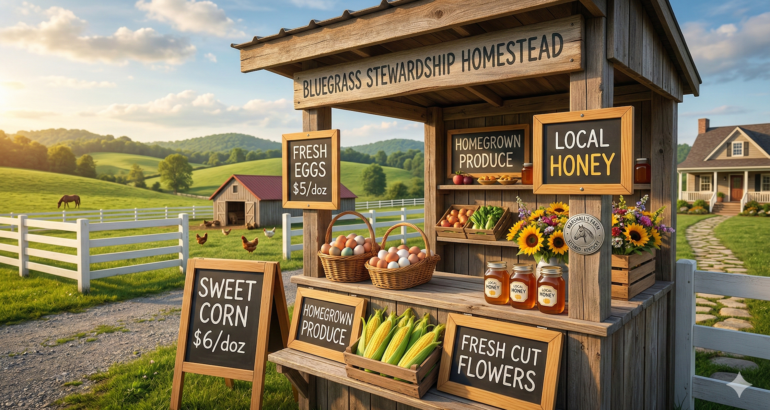
The moment you place a “For Sale” sign on your gate or sell produce from your driveway, you have crossed the line from “residential use” to “business pursuit”.
Standard homeowners liability often has a universal exclusion for liability claims arising from business activity. This is critical:
- If a customer claims your unpasteurized eggs made them sick… your homeowner policy likely won’t cover the lawsuit.
- If a customer claims your honey contained an allergy trigger you didn’t list… your homeowner policy likely won’t cover it.
- If someone slips and falls while buying your heirloom tomatoes… that activity might be excluded.
Homesteader Action Plan: While you are likely protected by “Kentucky’s Agritourism Liability Law” for certain on-farm activities, you are not protected from product liability. You need a specialized Product Liability Endorsement specifically designed for cottage industries to protect your family assets from food-borne illness claims.
Connect with Your Kentucky Ag Specialists
Homesteading is a lifestyle of resilience, but that resilience must extend to your financial foundation.
At Marshall Insurance, our deep expertise in Farm & Equine insurance means we understand the specific challenges faced by Kentucky hobby farmers. We aren’t just selling policies; we are wrangling a better deal for our neighbors, providing the independent advocacy you need from the cockpit to the stable.
Don’t wait for a mishap to find the gap in your suburban policy. Call our experts today to “select the type of insurance” you actually need, and let Marshall help you build a solid plan for your family’s tomorrow.